
2025 Hidden River Patient Outcomes
In eating disorder treatment, trust is everything, and trust is strengthened by transparency. Thoughtful, responsible outcome reporting moves the conversation beyond promises and marketing language, offering real insight into what healing can look like while signaling a commitment to continued learning and improvement. Being open about the results sets a higher bar for quality care, recognizes the courage of those moving towards recovery, and offers hope that meaningful, lasting change is possible.
With these thoughts in mind, we’re honored to share the 2025 patient self-reported outcomes at Hidden River.
These findings reflect data from approximately 100 patients and over 200 clinical assessments completed throughout 2025, underscoring the reliability of the outcomes. Patients represented a range of eating disorder diagnoses, reflecting the complexity and diversity of individuals served at Hidden River. The most common diagnoses included anorexia nervosa (restricting type), other specified feeding and eating disorder (OSFED), and binge/purge presentations.
Hidden River patients complete self-reported treatment measures that offer meaningful insight into their progress in reducing anxiety and depression while enhancing quality of life.
These measures include the Beck Anxiety Inventory (BAI), the Beck Depression Inventory (BDI-2), and the Eating Disorder Quality of Life Survey (EDQLS).
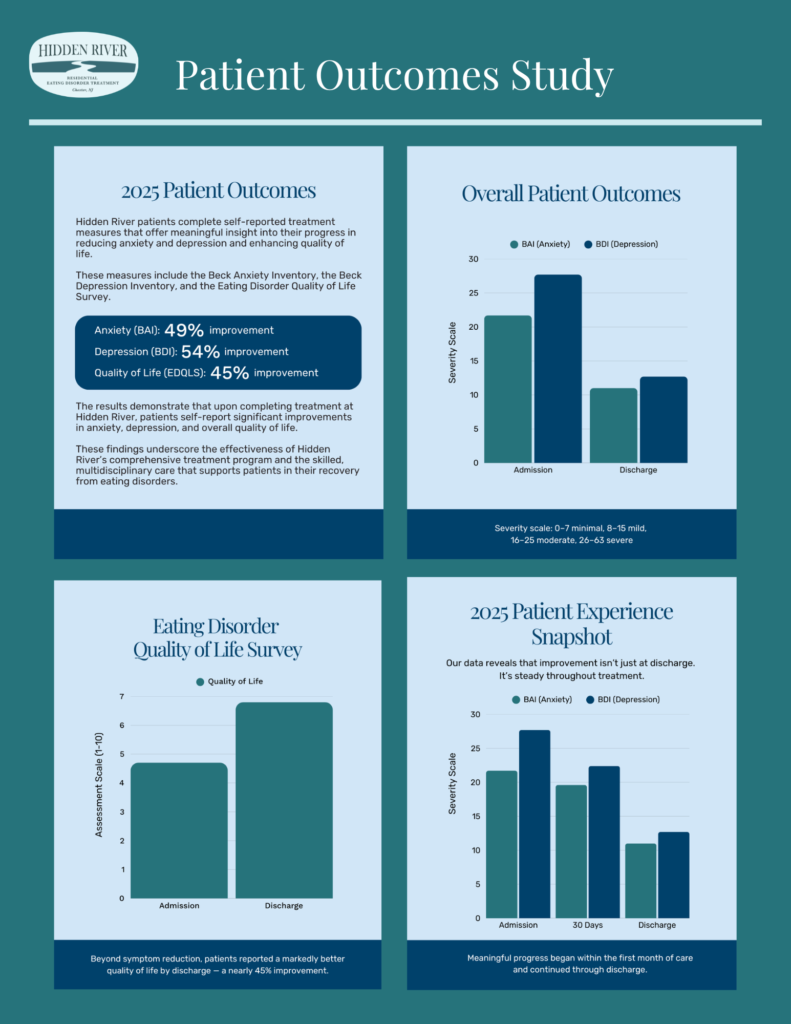
For anxiety (BAI), our patients reported a strong, clinically meaningful reduction with average scores at admission of 21.7 (moderate range) and average scores at discharge of 11.0 (mild range). Overall, this reveals a 49% decrease in anxiety symptoms.
For depression (BDI-2), patients reported even greater improvement. They moved from an average score of 27.7 (moderate-severe range) to 12.7 (mild range) between admission and discharge, resulting in a 54% decrease in depressive symptoms.
Beyond symptom reduction, patients reported a markedly better quality of life (EDQLS) by discharge — a nearly 45% improvement. Specifically, they reported an average score of 4.7 at admission and 6.8 at discharge.
The results demonstrate that, upon completing treatment at Hidden River, patients self-report significant improvements in anxiety, depression, and overall quality of life. Moreover, these findings underscore the effectiveness of Hidden River’s comprehensive treatment program and the skilled, multidisciplinary care that supports patients in their recovery from eating disorders.
One of the strongest stories of our outcomes data is that patient improvement remained steady throughout treatment.
For anxiety (BAI), patients reported an average score of 21.7 at admission, 19.6 at 30 days, and 11.0 at discharge. For depression (BDI-2), patients reported an average score of 27.7 at admission, 22.4 at 30 days, and 12.7 at discharge. Meaningful progress began within the first month of care and continued throughout treatment.
We remain committed to measuring, learning, and evolving alongside our patients and referring partners. These clearly presented outcomes are shared to help patients believe their lives can improve. We also hope to give providers confidence that their referral will be supported with clinically rigorous, compassionate care.
To learn more about Hidden River, visit our website or contact us at info@hiddenriverhealing.com.
Related posts

Let’s Connect! Where to Find Hidden River This November and December
With a full calendar of events planned for November and December, we're looking forward to spending

August and September Employees of the Month: Cara Becker and Jessica Milne
We’re kicking off October by highlighting two recent Employees of the Month, Cara Becker, who we h

Perspectives on Nasogastric Tube (NGT) Feeding in Eating Disorder Treatment: A Q&A With the Hidden River Team
Learn when NGT feeding may be used in eating disorder treatment, what patients and families can expe
Leave a Reply
You must be logged in to post a comment.